
On this page:
1. Introduction to Psychosynthesis
2. The Context and Challenge of Change
3. Psychospiritual Psychology and Psychosynthesis
4. Psychosynthesis Counselling and Psychotherapy
- Common Issues
- The Psychosynthesis Approach to Symptoms
- Uncertainty and Transition
- Why work with a Psychosynthesis Therapist?
- What makes Psychosynthesis Different from Other Therapies?
- Counselling for Couples
5. Introduction to Dr Roberto Assagioli – Founder of Psychosynthesis
Introduction to Psychosynthesis
Psychosynthesis is widely acknowledged as one of the most coherent and effective frameworks of psychospiritual psychology. It was first formulated in 1910 by Roberto Assagioli, an Italian psychiatrist and contemporary of C.G. Jung. Initially working in the analytic frameworks of the time, Assagioli found his experience also kept pointing him towards the higher reaches of what came to be called ‘self-actualization’ which was little addressed in the pathology based practices of the time. He began to integrate Western analytic depth psychology and Eastern meditative ‘height’ psychology into a comprehensive approach to human growth and development.
Psychosynthesis has continued to evolve its holistic perspective and unifying principles and can be successfully applied not only therapeutically and in self-development, but also in any context of systemic organisation and process.
The context and challenge of change
There is an idea that is beginning to take hold in our personal and collective awareness. It is not a new idea, but in returning to it, we are having to turn upside down a cherished and convenient notion of the world and our place in it.
Whether in the fields of agriculture or economics, education or politics, medicine or manufacturing, what is increasingly having to be acknowledged is a context that assumes, rather than denies, the idea of interrelatedness. Such a context extends to the greater connections inherent in spiritual practices and also to those implied in quantum and virtual hypotheses.
At personal, local, national and global levels, we are living with a growing realisation of this interrelatedness. This is because technology is not only increasing the amount of change people experience but also the amount of information about such change.
The most creative human response to incoming information is to look for the ordering pattern, or context, that enables the information to cohere. Old mechanistic and separative ways of thinking which deny interrelatedness can no longer satisfactorily order the information we are receiving about ourselves and our world.
An evolutionary response is being demanded that seems to require us to think in new ways. The challenge of change is to liberate more of our creative potential, engage the loving wisdom of our hearts, and express the highest sense of our values powerfully and in such a way that this response is made.
Psychospiritual psychology and Psychosynthesis
One aim of psychology is to help us understand the nature of human consciousness. In the West, initial understanding was derived from studying pathology (mental illness) and animals. These approaches were increasingly challenged as being too limiting and people like Assagioli and Maslow articulated the need to study healthy people in order to develop comprehensive models of human experience.
From this broader base of humanistic psychological understanding, it then made sense to look at people who seemed particularly creative, self- actualised, and in touch with a deeply transcendent experience of life which has long been the study of Eastern psychospiritual traditions. This became the context of transpersonal psychology, though not its sole focus.
Psychospiritual psychology addresses the spectrum of human experience from undifferentiated, pre-personal consciousness, through development of a healthy personality and centre of identity in the world, and beyond. It explores opening to, and integrating, higher states of consciousness. This involves the process of ego-death, and the emergence of an expanded sense of Self, both individual and universal, knowing boundaries yet not limited by them. It is an evolutionary psychology, most relevant to our present day need to discover and express the best in human consciousness for the well-being and healing of person and planet.
Psychosynthesis Counselling and Psychotherapy
Common Issues
Counselling and therapy are powerful ways of getting clear perspective on issues and effecting change in our lives. Issues commonly dealt with include
- problems with relationships
- experiences of separation, loss and grief
dissatisfaction with the experience of work - sense of something missing
search for self-direction and meaning
desire for greater creative expression and fulfilment - crisis of identity caused by spiritual/religious experiences
- difficulty expressing one’s vision
- inability to change old patterns of behaviour
These issues are often experienced through their symptoms – such as feelings of inadequacy, being trapped, powerlessness, doubt, anger, depression and a sense of life having no meaning.
Psychosynthesis approach to symptoms
The psychosynthesis approach is not to see these symptoms as bad, necessitating their removal or cure, but to take a more systemic view. Symptoms carry a lot of information about what is going on at a deeper, inner level, and can be valued for alerting us to the necessity of paying attention to our inner being.
Exploring symptoms in this way involves discovering what is seeking to emerge in our knowing of ourselves, and then integrating this discovery into our day to day living.
Uncertainty & transition
Sometimes this discovery and integration can be achieved relatively easily. At other times it seems to require radical change and transformation of how we experience and know ourselves. We are faced with making a life transition. We need to let go of known, and therefore safe ways of being, and enter the uncertainty of the unknown.
If we do not engage this process, we compromise our integrity, impoverish our experience of both inner and outer worlds, and restrict ourselves through fear.
Often our fear is about feeling alone in the process, as well as about going into what is unknown. There may be little to support us in the culture.
Why work with a psychosynthesis therapist?
Working with a psychosynthesis counsellor or therapist means there is skilled support available. Often people feel they should be able to work through issues and life passages by themselves or with the help of friends. Sometimes this is possible, but often it is safer, more effective and more nurturing to make inner explorations with a guide who can choose from a range of methods and techniques, the most appropriate ways of facilitating that exploration.
Psychosynthesis specialises in adapting diverse methods to the person rather than the person to the method. Not applying pre-set techniques to everyone means the uniqueness of each individual can unfold organically. The dynamic process of psychosynthesis means that people actively experience making choices for themselves rather than being given advice or interpretation upon which they may or may not act.
Knowing ourselves more fully helps us to make creative responses to difficulties and opportunities. Responding in this way allows more passionate engagement with life, a richer experience of meaning, and increasing ability to use the integrative power of Will.
What makes psychosynthesis different from other therapies?
As with all therapies, the main difference is in the qualitative experience of the client. Having a holistic framework which articulates that the Self is the unifying center of the psyche, profoundly affects the energetic context of therapy and the interpersonal dynamics. This is so even when the client has no spiritual practice, vision, or language. In particular clients experience being met, rather than experiencing technique.
Because psychosynthesis addresses the spectrum of our experience – heights, depths and everyday concerns – the issue that the client is bringing can be addressed at the appropriate level. A psychosynthesis therapist will keep these levels distinct. This allows the context for work to be clear between client and therapist. Consequently change at an everyday form level as well as transformation at a more profound level is effected and integrated.
Words often used to describe the qualitative experience of psychosynthesis are gentle yet powerful, accepting and challenging, still and contained, subtle and profound. People respond to being encouraged to look at ‘What’s seeking to emerge, what’s calling me on, what’s beckoning me forward?’ as well as exploring ‘What’s holding me back, what’s blocking me, what’s my experience of pain about?’
It is the point of tension between what was, what is, and what could be, held dynamically in session, which excites, challenges and empowers clients.
People learn to monitor their process fluently on physical, emotional, mental and spiritual levels. They develop ability to contain and honour their process. Through working with the integrative power of Will (which is not just choice and determination but an awakening to the experience of observing and directing the psyche) people begin effectively to hold, explore and express their personal and collective vision of the world.
Counselling for couples
In a relationship there are times when the value or worth of that relationship is being questioned by one or both partners. There may be feelings of frustration, boredom, anger and hurt; difficulties with communication; confusing and conflicting motivations for being together. There may be an understanding that relationships have phases and changes, as do individuals, and these are times to seek clarity and re-examine commitment.
In such situations, a skilled counsellor can quickly help the individuals understand the dynamics of interaction in the system that the relationship forms. Creative responses to shift impasses in the system are generated. As with all responsible counsellors, a psychosynthesis counsellor is not attached to a particular outcome with an issue brought by a couple.
However, a psychosynthesis counsellor will be holding not only the personal level of the couple’s interaction but also the transpersonal level of the system. This is the level where the purpose and meaning of the relationship itself is held in focus. The potential of the relationship, which depends on the two people being together, is revealed. This unique potential is not available to either person on their own, as it is a function of their interaction.
Acknowledging and working with these two levels allows both the possibility of making effective changes in relationship, and the possibility of exploring the depth and richness of intimacy.
Introducing Dr Roberto Assagioli
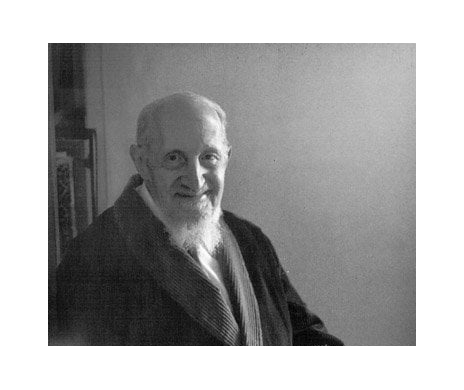
Psychosynthesis was founded by Dr. Roberto Assagioli, who trained in psychiatry with Eugen Bleuler, known for his formative work with schizophrenia. Assagioli was involved with the early psychoanalytic movement in Europe, writing a critique of psychoanalysis for his doctoral thesis, becoming a member of the Freud Society in Zurich, and the only Italian member of Jung’s study group in 1910.
Assagioli practiced as a psychiatrist in Italy and developed his own thinking and practice in the creative cultural milieu of Florence. In 1926 he founded an Institute there which in 1933 became the Institute of Psychosynthesis. Fascist hostility towards his international humanitarian activities forced him to close the Institute in 1938 and he was imprisoned for a month. He and his son Ilario had to take refuge from Nazi persecution for a time, the privations of which may have caused Ilario’s premature death in 1951.
Michael Murphy (one of the founders of the Esalen Institute at Big Sur) is quoted in The New Yorker as saying:
What Aurobindo called yoga, what Abe Maslow called self-actualization, what Fritz Perls called organismic integ- rity, Assagioli called psychosynthesis. All these share basically the same idea that there is a natural tendency toward evolution, towards unfoldment, that pervades the universe as well as the human sphere, and that our job now is to get behind that and make it conscious. But the disciplines that emerge to deal with this unfoldment have to reflect the many-sidedness of the human psyche, and this is why psychosynthesis is so valuable. Assagioli himself was really a man of very wide European culture. He was the truest sage I’ve ever met.
© Psychosynthesis Education and Research.
Our thanks to Helen Palmer (Fellow Member of PAnzA) for permission to use this text, originally used in the Institute of Psychosynthesis New Zealand Handbook.